Referee Psychology: Crowd Noise and Decision‑Making

Elite officiating happens inside human heads as much as on the field. Noise, reputation, fatigue, and sequence effects nudge judgment at the margins. This article distills peer‑reviewed findings and translates them into crew behaviors that reduce variance without slowing the game.
Calibration & controls
Calibrate early and often. Even for psychology‑heavy topics, the ‘calibration’ is clarity about roles and thresholds.
Pre‑match briefings that set language templates reduce variance later.
Communication
Viewers trust numbers when paired with plain language. Replace ‘clear and obvious’ clichés with concrete criteria.
On‑screen overlays should disclose uncertainty bands when decisions are within combined error.
Implementation roadmap
Start with a pilot competition, collect baseline metrics, and iterate UI and policy every two weeks.
Train crews with synthetic scenarios that mimic local camera geography and production quirks.
Metrics that matter
Measure decision latency, overturn rate, and confidence interval width by competition and crew.
Publish monthly aggregates; sunlight strengthens cultures that value learning over blame.
Edge cases
Document scenarios that routinely cause confusion and pre‑decide preferred angles and overlays.
In ambiguous footage, adopt an abstention policy rather than over‑claiming certainty.
Evidence in brief
We summarize key studies and field experience and turn them into checklists crews can actually use on match day.
Short experiments—like pre‑committing to language before entering a review—have disproportionate impact.
Operational heuristics
When in doubt, reduce degrees of freedom. A UI that constrains camera picks and line placement protects judgment under pressure.
Time‑boxing review steps (e.g., 20s for triage, 40s for evidence gathering) prevents endless loops.
Governance & accountability
Keep decision logs with timestamps, parameter versions, and who did what when.
External audits—annually at minimum—keep drift in check and deter motivated reasoning.
Key practices
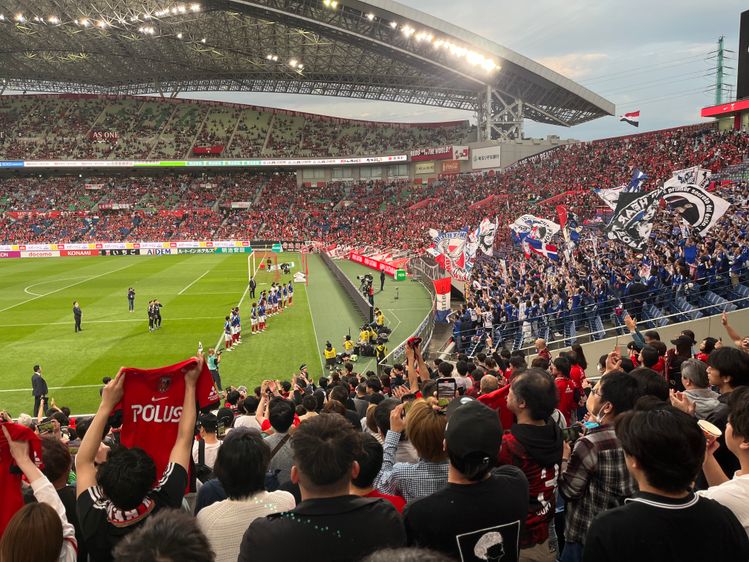
- Crowd noise raises arousal; use noise‑cancelling headsets and pre‑agreed hand signals.
- Sequence effects are real: after a harsh red, crews subconsciously avoid a second. Log it—don’t guess.
- Fatigue distorts time perception. Rotate evidence roles during long reviews.
Bottom line
Credibility comes from disciplined process, clear communication, and the humility to abstain when evidence is thin. With the right metrics, tools, and culture, officiating becomes both faster and fairer.
This article outlines the psychology behind split‑second officiating. Crowd noise, player reputation, and recent‑call bias can nudge judgment at the margins. We summarize research on noise and bias, then translate findings into practical crew behaviors—like pre‑committing to language and using silent signals—that reduce variance without slowing the game.
The modern handball rule blends intent, consequence, and body silhouette. We review the law’s evolution and show how AI can detect arm extension while respecting uncertainty. Our baseline policy: AI should flag candidates; humans decide context.
FAQ
- Does calibration guarantee perfect decisions?
- No. Calibration reduces systematic error and makes remaining uncertainty legible. A well-calibrated system is faster to operate and easier to audit, but it still abstains when evidence is thin.
- Why show uncertainty to viewers?
- Because audiences will estimate it anyway. An explicit band or confidence label prevents overconfidence and teaches viewers how evidence is weighed.
- How often should crews re-check homography?
- At minimum before kick-off and after halftime, and any time production switches to a camera that has not been verified in the session.
- What if cameras are not genlocked?
- Then treat every angle as suspect. Either resync to a shared PTP reference or declare limitations up front; pretending precision exists will backfire later.
Operations Playbook
- Start tiny: write down the current process, then remove one ambiguous step every week.
- Instrument the UI: measure handle time per review step and publish weekly charts to crews.
- Store artifacts: overlays and parameter versions must be exportable as JSON so others can reproduce a decision.
- Practice uncertainty language in pre-season workshops to keep game-day comms calm and precise.
Case Study
In a derby where the crowd noise was peaking, the crew pre-committed to a 40–40–40 rhythm: forty seconds for triage, forty for evidence gathering, and forty for decision wording. Because the lens profiles were tied to zoom state, the operator switched angles with confidence; the uncertainty band straddled the offside line, and the UI automatically suggested 'insufficient evidence.' Post-match, the club complained, but the log—time-stamped contact frame, residual errors, and who did what—stood up to scrutiny.
Glossary
- Homography: A 2D projective transformation mapping the pitch plane to the image; used to align graphics to field markings.
- Residual error: The mismatch between expected and observed features after calibration; a compact summary of drift.
- Genlock/PTP: Timing tech that forces cameras to agree on when 'now' is; essential for frame-accurate reviews.
- Re-acquisition: Tracker mode that widens hypotheses when the ball is occluded instead of guessing a single location.